
On reforms in pipeline, she said the government is for universal right to minimum wages and wants to remove regional disparity through a national floor wage.

India's economic growth is now 'extremely fragile' and needs all the support that it can get, as private consumption and capital investment are yet to pick up, RBI Monetary Policy Committee (MPC) member Jayanth R Varma said on Friday. Varma further said out of the four engines of growth for the economy, exports and government spending supported the Indian economy through the pandemic, but other engines need to pick up the baton now. " I like to think in terms of the four engines of growth for the economy: exports, government spending, capital investment and private consumption. "...while exports cannot be the main driver of growth because of the global slowdown, government spending is necessarily limited by fiscal constraints," he told PTI.

Amid fears of a third wave of coronavirus pandemic and hardening of retail inflation, the Reserve Bank is likely to maintain status quo on interest rate and watch the developing macroeconomic situation for some more time before taking any decisive action on monetary policy. The RBI is scheduled to announce its bi-monthly monetary policy review on August 6 at the end of the three-day meeting -- August 4-6 -- of the Monetary Policy Committee (MPC). The RBI Governor-headed six-member MPC decides on the key policy rates.

The military establishment is in no mood to forgive or forget Imran's anti-military utterances, observes Rana Banerji, who headed the Pakistan desk at RAW, India's external intelligence agency.

To minise wasteful administrative costs, number of enterprises in strategic sectors will ordinarily be only one to four; others will be privatised/merged/brought under holding companies, she said.

'The money is readily available to the depositors.'

The finance ministry said the sharp inflows last fiscal were due to the government's policy initiatives and economic recovery.

Using buyback as a divestment tool is not new, the amount raised this year is phenomenally high.

'Gold could return 10% to 12% in the next two-three years.'
Provided talks on the matter are fruitful, the dividend payout will made during the current RBI financial year ending June 30, 2018.

They can wait, as RBI has indicated the bonds could be linked to CPI in future.

Bonds were issued at Rs 3,119 per gramme of gold.

The first tranche of the IIBs 2013-14 for Rs 1,000-2,000 crore (Rs 10-20 billion) will be issued on June 4, it said, adding that the maturity period of these bonds will be 10 years.

Falling growth, inflation and lower fiscal deficit are expected to prompt RBI to cut rates.

The RBI, had, earlier in the day, hiked CRR by 0.75 per cent in two tranches, a move, it said, would help flush-out Rs 36,000 crore (Rs 360 billion) from the system.

In financial year 2010-11, the likes of Larsen & Toubro, India Infrastructure Finance Company Limited, Power Finance Corporation and IDFC issued these in tranches.
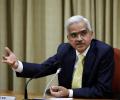
The Reserve Bank of India (RBI) on Friday decided to leave the benchmark interest rate unchanged at 4 per cent but maintained an accommodative stance, implying rate cuts in the future if need arises to support the economy hit by the Covid-19 pandemic.

The greatest unknown in this risky initiative lies in the way human relationships will play out -- not just between the Agniveers, who will be competing with their fellows for permanent jobs beyond their four-year tenures -- but also between the Agniveers and existing full-time soldiers, warns Ajai Shukla.

These are the highlights of the seventh bi-monthly monetary policy statement for 2019-20 by the RBI amid COVID-19 pandemic:

Finance Minister Nirmala Sitharaman's Rs 30,600 crore government guarantee for the bad bank has changed the body language of bankers for the better, observes Tamal Bandyopadhyay.

Jindal Power bagged 2 coal mines in Chhattisgarh.
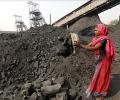
The states will get over Rs l lakh crore.

The bonds will likely be simultaneously launched in major financial centres such as London, Singapore, Hong Kong, New York for a term of no less than 20 years.
A two-pronged strategy -- filing a police complaint and approaching a consumer court -- works best.

A lot of work is needed to be done on the part of the insurance sector behemoth, and the government, before it is ready for its market debut.

EY said out of the nearly Rs 21 lakh crore package, Rs 8.01 lakh crore is on account of liquidity enhancing measures taken by the RBI since February.

The comment was in response to a June 19 Reuters story citing sources with knowledge of the matter as saying that India planned to clear some oil payments to Iran through the United Arab Emirates central bank.
Shortly after the Reserve Bank of India cut its signaling rates and the announcement of stimulus package, leading lenders HDFC Bank and Union Bank of India on Monday reduced their benchmark prime lending rates (PLR).

The investments were a mix of issuance of guarantees ($2.53 billion), loan ($257.60 million) and of equity ($232.59 million).

The financial sector has been deeply troubled since 2013. It is now in a full-blown crisis, warns Devangshu Datta.

For the first time, consumers, including those at the so-called bottom of the pyramid, are monetising gold by taking loans from banks, offering the yellow metal as collateral, says Tamal Bandyopadhyay.

Despite price correction, policies that support the yellow metal will remain in place in the foreseeable future.
The automobile companies, say analysts, would take the maximum hit as the hike in the loan rates could soak up the demand for cars and commercial vehicles and pull the growth rates down.
The tightness in the liquidity situation escalated on Friday, with the interbank call money rates jumping the highest in six years to close at 19 per cent. The rates had touched 25 per cent intra-day.

Banks are set to sell dud-loans worth Rs 90,000 crore of 22 firms in the first tranche to the National Asset Reconstruction Company (NARCL). It's reason for cheer given that such sales to asset reconstruction companies (ARCs) have been poor in recent times. In fiscal 2020, their assets under management (AUM) contracted by 4 per cent; and in fiscal 2021, it fell by another 100 basis points to Rs 1.07 trillion. So, why are we where we are?
All in all, the global economic recovery has been wavering as a result of rising crude oil and commodities prices and as a result, interest rate hike would further affect growth.

The RBI governor's assurance should give investors enough confidence to start believing in the NBFC sector again, say bankers.
Reserve Bank of India has turned down Hongkong and Shanghai Banking Corporation Ltd's plans to pick up about 20 per cent stake in UTI Bank by restricting its approval for acquisition of only 14.6 per cent stake

There are 350,000 jewellers, of which 13,000 are BIS-certified.

Each vaccination session will cater to a maximum of 100 beneficiaries and the Union Health Ministry has advised states not to organise 'unreasonable numbers of vaccination per site per day'.
